Product Description
Product details
| Country of Origin | Made in India |
| Model Name/Number | PURE H20 |
| Automation Grade | Automatic |
| Installation Type | Containerized Plug & Play |
| Material | Stainless Steel |
| Number Of Membranes In Ro | 2 to 4 |
| RO Capacity | 500-1000 (Liter/hour) |
| Usage/Application | Industrial |
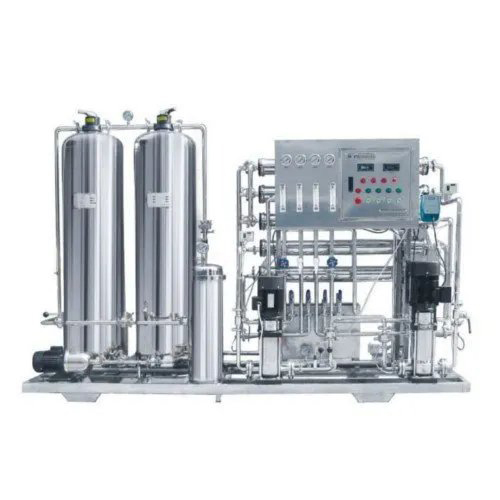
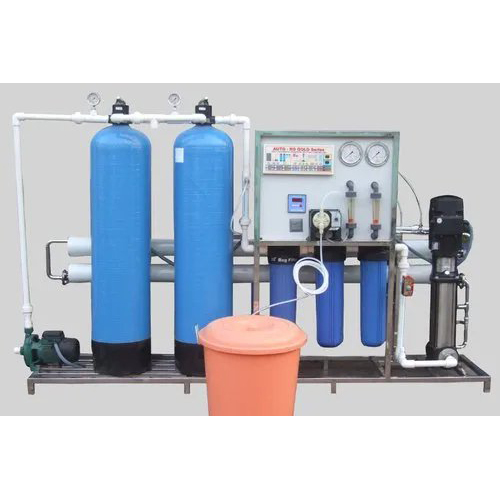
Advanced Purification ProcessThis RO plant features a proven multi-stage filtration process using sand, carbon, and micron filters, followed by high-performance RO membranes. This thorough treatment removes dissolved salts, bacteria, and endotoxins, meeting stringent standards for safe and pure dialysis water.
Automated Operation & Ease of MaintenanceEquipped with a fully automatic PLC control panel, the plant reduces human intervention and optimizes system performance. The integrated CIP (Clean in Place) system streamlines maintenance, prolongs membrane life, and minimizes downtime.
Adaptability & CustomizationAvailable in capacities from 250 to over 2000 liters per hour, the plant is customizable and adaptable to various water sources like borewell, municipal, or tap water. Its compact, skid-mounted or stationary design ensures hassle-free installation and setup in medical environments.
FAQ's of Dialysis RO Plant:
Q: How does the Dialysis RO Plant ensure water purity for hemodialysis?
A: The plant employs multi-stage filtration with sand, activated carbon, and micron filters, followed by advanced RO membranes. This combination effectively reduces dissolved solids, bacteria, and endotoxins, ensuring that the water quality meets AAMI and ISO requirements, with purity levels up to 99.8%.
Q: What pre-treatment is included before the RO membrane stage?
A: Before water enters the RO membrane, it passes through a multi-grade filter, an activated carbon unit, and a micron filter. These stages help remove particulates, chlorine, organic compounds, and fine impurities, protecting the RO membrane and ensuring optimal filtration efficiency.
Q: When should the CIP (Clean in Place) system be used?
A: The CIP system is recommended for use as part of regular maintenance or whenever there is a noticeable decline in system performance. It helps clean and restore the RO membranes without disassembly, extending membrane life and keeping the plant running smoothly.
Q: Where can this Dialysis RO Plant be installed?
A: The plant can be installed in hospitals, clinics, and medical centers requiring reliable dialysis water supply. Its skid-mounted or floor-mounted design, along with optional caster wheels for mobility, allows flexible placement within healthcare facilities.
Q: What are the key benefits of using this RO plant for dialysis applications?
A: Key benefits include consistent production of ultra-pure water, low bacteria and endotoxin levels, fully automated operation with low maintenance, high desalination and efficiency rates, and compliance with stringent global water quality standards. Its compact, customizable design fits diverse medical requirements.
Q: How is water quality monitored and controlled during operation?
A: The fully automatic PLC control panel continuously monitors critical parameters such as operating pressures, conductivity, flow rates, and water purity. Automated alerts and diagnostics ensure that any deviation is quickly addressed, maintaining consistent water quality.
Q: What types of feed water can the plant handle, and what is the operating pressure range?
A: The plant accommodates borewell, municipal, and tap water sources with feed water hardness up to 500 ppm. It operates efficiently within a pressure range of 8 to 15 kg/cm2, delivering high-quality water for reliable dialysis treatment.


 Get a Quote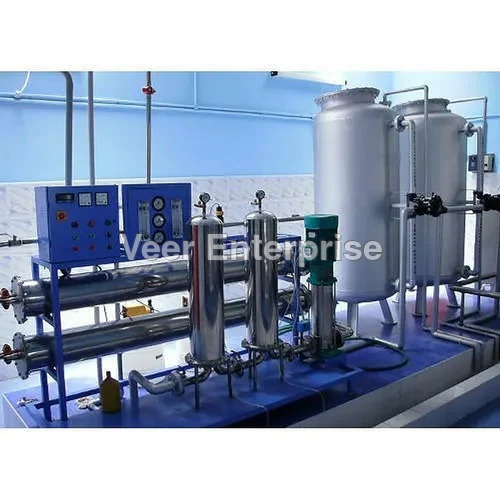




 Send Inquiry
 Send Inquiry
 Send SMS


 English
 Spanish
 French
 German
 Italian
 Chinese (Simplified)
 Japanese
 Korean
 Arabic
 Portuguese