Product Description
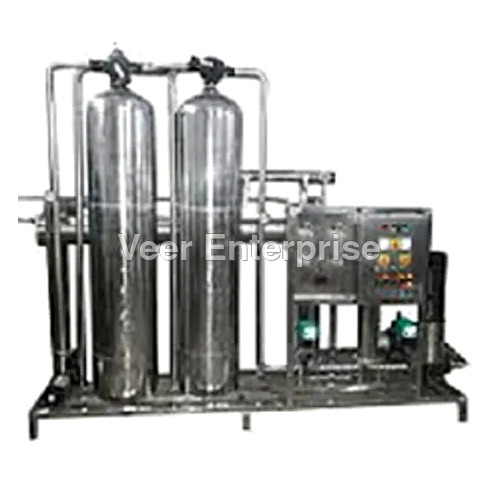
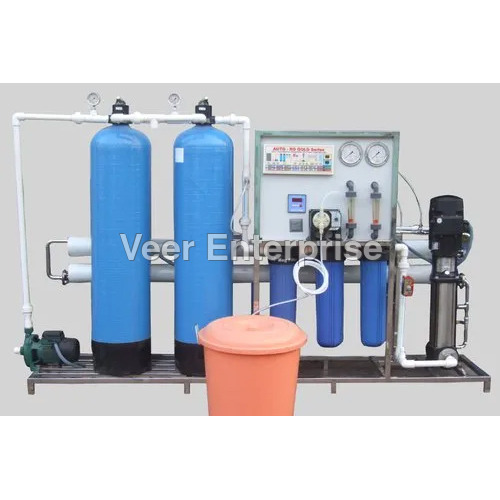
2000 LPH Fully Automatic Ro Plant is required to be used for water purification purpose so as to deliver safe drinking water. In order to meet the international standards of quality, our experts assemble this plant by utilizing optimum grade components and pioneering techniques keeping in mind the set industry standards. It is popularly acclaimed for its attributes such as fast performance, easy maintenance and trouble free functionality. Furthermore, the offered 2000 LPH Fully Automatic Ro Plant can be accessed from us in several technical specifications at highly competitive rates.
Product details
| Capacity Inlet Flow Rate | 2000L/Hr |
| Water Storage Capacity | 2000 L |
| Type Of Purification Plants | Reverse Osmosis |
| Country of Origin | Made in India |
| Installation Type | Containerized Plug & Play |
| RO Capacity | 2000-3000 (Liter/hour) |
| Number Of Membranes In Ro | 2 |
| Material | FRP |
| Automation Grade | Automatic |
| Warranty | Gerrenty 1 year of all parts |
| I Deal In | New Only |
| Brand | Pure H2O |
| Usage/Application | Industrial |
Advanced Multi-Stage FiltrationThis RO system incorporates 5-6 stages of purification, including sand, carbon, and optional softener filters. High-efficiency micron and activated carbon filters remove suspended particles, chlorine, odor, and contaminants before reaching the TFC RO membrane for final polishing. This ensures high-quality water output, suitable for drinking and industrial applications.
User-Friendly Digital Control & Flexible OperationA digital control panel with integrated alarms offers real-time monitoring of system status and water quality. Its dual operational modes-automatic and manual-provide users with flexibility to operate the unit as per requirements and site conditions. Alarms alert users to essential parameters, making maintenance easy and safe.
Sustainable & Customizable DesignThe plant offers up to 75% water recovery with a dedicated reject water outlet for recycling or irrigation, minimizing water waste. Its skid-mounted, modular design allows for customization based on site dimensions. The robust stainless steel and FRP construction ensures durability and long service life in harsh environments.
FAQ's of 2000 LPH Fully Automatic Ro Plant:
Q: How does the 2000 LPH Fully Automatic RO Plant purify water?
A: The plant uses a multi-stage process starting with sand, carbon, and optional softener pretreatment, followed by TFC membrane reverse osmosis. This removes suspended particles, organic impurities, salts, and up to 99% of TDS, resulting in safe, pure water.
Q: What are the operational modes of this RO plant?
A: This RO plant features both automatic and manual modes, which can be selected using its digital control panel. Automatic mode streamlines daily use, while manual mode offers greater operator control during maintenance or special operating conditions.
Q: When is it beneficial to attach a chiller to the RO plant?
A: A chiller is recommended in applications where cooled purified water is required, such as beverages, food processing, or laboratories. The system supports chiller integration for enhanced versatility.
Q: Where can the 2000 LPH Fully Automatic RO Plant be installed?
A: The plant is suitable for diverse installation sites, including industrial premises, commercial buildings, institutions, and residential complexes. It accommodates various water sources, such as borewell, municipal, river, and industrial water, and the dimensions are customized for available space.
Q: What is the process for recycling reject water from the RO plant?
A: The system includes a reject water outlet that enables the collection of concentrate water. This can be used for secondary purposes like irrigation, cleaning, or recycled back into the system, supporting sustainable water management.
Q: How does the digital panel contribute to user convenience and safety?
A: The integrated digital control panel provides continuous monitoring and alarm notifications for system performance or faults. This streamlines routine checks, alerts operators promptly, and enhances system safety and user convenience.
Q: What maintenance is required for efficient operation?
A: Routine maintenance involves periodic cleaning or replacement of pre-filters and membranes, regular inspection of pumps and control systems, and monitoring of inlet pressure and recovery rates. The low-maintenance design and panel alarms make this process straightforward and reliable.


 Get a Quote




 Send Inquiry
 Send Inquiry
 Send SMS


 English
 Spanish
 French
 German
 Italian
 Chinese (Simplified)
 Japanese
 Korean
 Arabic
 Portuguese