Product Description
Product details
| Country of Origin | Made in India |
| Installation Type | Complete Civil work with Installation |
| RO Capacity | 2000 (Liter/hour) |
| Number Of Membranes In Ro | 2 |
| Material | FRP |
| Automation Grade | Automatic |
| Purification Type | Water Purification Reduce TDS |
| Model Name/Number | PURE H20 |
| Max Water Recovery Rate | 60-65 % |
| Brand | Pure H2O |
| Usage/Application | Industrial |
| RO Membrane Type | Water Purification |
Specification
| RO Capacity (Liter/hour) | 1000-2000 (Liter/hour), 200-500 (Liter/hour), 2000-3000 (Liter/hour), 500-1000, >3000, 200-500 |
| Design | Customized |
| Plant Application | Industrial RO Plant, Institutional RO Plant |
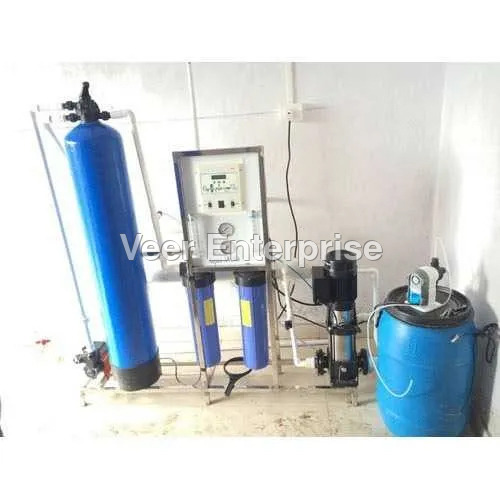
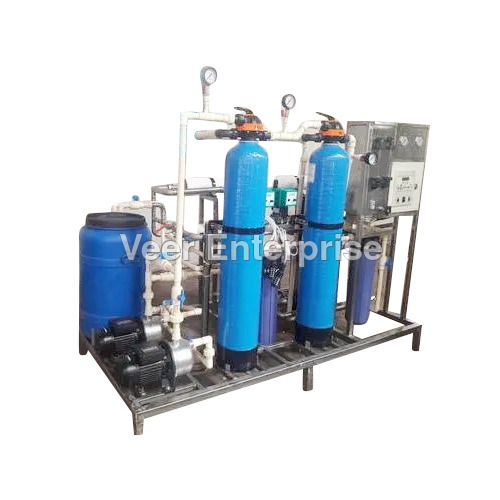
High-Efficiency Water PurificationThe 2000 LPH Semi-Automatic FRP RO Plant delivers clean and safe water at a rapid rate of 2000 liters per hour. Its semi-automatic operation simplifies management, ideal for both industrial and commercial environments seeking consistent water quality with less manual supervision.
Durable FRP ConstructionBuilt from Fiber Reinforced Plastic (FRP), the RO plant withstands harsh operating conditions and corrosion, ensuring extended performance. The material choice makes it particularly suitable for environments where longevity and reliability are essential.
Wide Voltage Support & Electric OperationCompatible with electric voltages from 220 to 420 volts, this RO system is adaptable across diverse electrical setups. The electric drive ensures efficient functionality, making it convenient for various locations and operational needs.
FAQ's of 2000 LPH Semi-Automatic FRP RO Plant:
Q: How does the 2000 LPH Semi-Automatic FRP RO Plant purify water?
A: The plant uses reverse osmosis (RO) technology to filter contaminants from water. Pressurized water passes through semi-permeable membranes, which trap impurities and produce clean, potable water at a capacity of 2000 liters per hour.
Q: What are the primary benefits of using this FRP RO plant?
A: Key benefits include high output capacity, reduced manual intervention due to its semi-automatic controls, long-term durability thanks to its FRP construction, and compatibility with varying voltage ranges. These features make it optimal for continuous operation in demanding environments.
Q: When is this RO plant most suitable to use?
A: This RO plant is best used when there is a need for consistent, large-scale water purification, such as in factories, hotels, schools, or other institutions with high water demand. Its semi-automatic nature suits settings where reliability and regular output are crucial.
Q: Where can the 2000 LPH FRP RO Plant be installed?
A: It can be installed in factories, educational institutions, commercial complexes, and any setting requiring large-scale water purification. Its robust FRP build allows for indoor or sheltered outdoor installation, tailored to the site's requirements.
Q: What is the process to operate this semi-automatic RO plant?
A: Operation involves connecting the plant to an electric power source within the supported voltage range (220-420V), ensuring proper water inlet, and following the control panel prompts for semi-automatic management. Routine monitoring and occasional maintenance keep the system running smoothly.
Q: How is maintenance managed for this RO plant?
A: Maintenance mainly involves periodic checking and cleaning of filters and membranes, inspecting the FRP housing for integrity, and ensuring the electrical components are functioning properly. The FRP material reduces the risk of corrosion, simplifying long-term upkeep.


 Get a Quote




 Send Inquiry
 Send Inquiry
 Send SMS


 English
 Spanish
 French
 German
 Italian
 Chinese (Simplified)
 Japanese
 Korean
 Arabic
 Portuguese